

Most refrigerator troubleshooting lists throw a dozen possible causes at you with no particular order, which leaves you checking the compressor before you’ve even confirmed the thing is plugged in. A technician doesn’t work that way. The checks that take thirty seconds and cost nothing come first, and the expensive possibilities only get a look once the simple ones are ruled out. Here’s that same sequence, in the order it actually gets used in the field.
Start here: is it the fridge or just the freezer
Before you touch anything else, open both compartments and figure out exactly what’s warm and what’s not.
If the freezer is working fine but the refrigerator section is warm, you’re usually looking at an airflow problem. Most refrigerators cool the fresh food section using cold air pulled from the freezer through a duct system, so a blockage in that duct, a failed damper, or a frozen-over evaporator coil can leave the freezer cold while the fridge warms up.
If both the freezer and the refrigerator are warm, the problem is more likely upstream, something affecting the whole cooling system: power, the compressor, the condenser, or the main cooling fan. That distinction matters because it tells you which checks are worth your time and which ones you can skip. Keep it in mind as you go through the rest of this list.
Check the basics: power, thermostat, and temperature settings
It sounds too obvious to mention, but plenty of warm refrigerators turn out to be unplugged, tripped on a breaker, or bumped to a warmer setting by a kid reaching for a popsicle. Rule it out first.
Confirm the fridge is actually getting power. Check the outlet with another device, check the breaker or fuse panel, and look at the power cord for damage. Some refrigerators are on a dedicated circuit that can trip without affecting anything else in the house, so don’t assume the power is fine just because the lights work.
Next, check the temperature control. Refrigerators should run between 37 and 40 degrees Fahrenheit, and freezers around 0 degrees. If the control got bumped to a warmer setting, or got locked into demo or showroom mode (more common than you’d think on newer models), that alone will explain the problem. Reset it to the manufacturer’s recommended setting and give it 24 hours to respond before assuming something is actually broken.
Clean the condenser coils before you assume anything is broken
This is the single most common cause of a warm refrigerator, and it’s the one most homeowners skip straight past because it doesn’t sound like a real problem.
The condenser coils are where the refrigerator releases heat from inside the unit into your kitchen. They’re usually located either behind a grille at the bottom front of the fridge, or on the back. When those coils get coated in dust, pet hair, and kitchen grease, the fridge can’t release heat efficiently, so the compressor has to run longer and harder just to keep up, and eventually it can’t keep up at all.
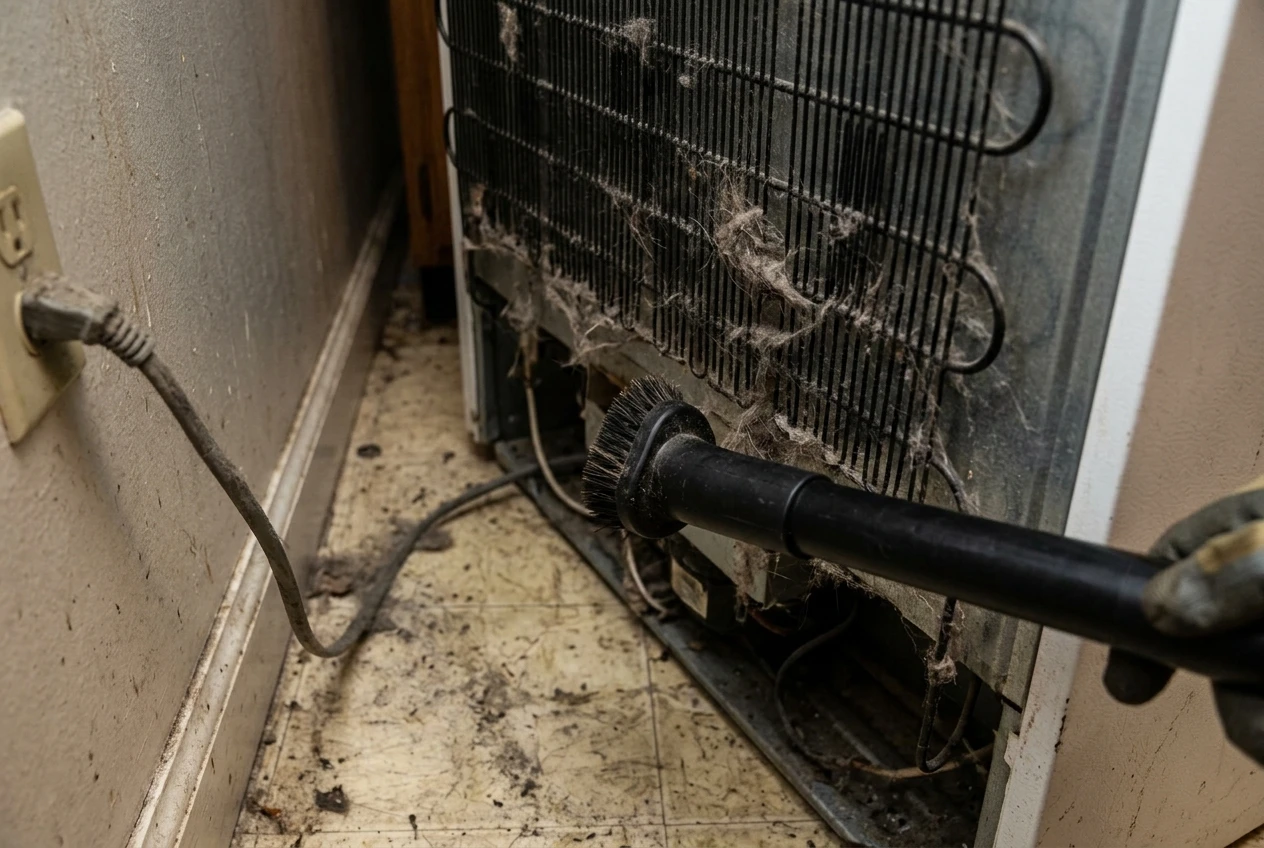
To check them, unplug the fridge, pull it away from the wall or remove the front grille, and look at the coils. If you see a visible layer of dust or hair, that’s very likely contributing to your problem. Vacuum them with a brush attachment, or use a coil cleaning brush to get between the fins, then vacuum up what falls. This takes about fifteen minutes and costs nothing.
Dirty coils are often mistaken for a failing compressor, which is exactly why this check belongs near the top of the list, before you start chasing anything more expensive.
Check if the condenser fan is actually spinning
The condenser fan pulls air across those coils to help dissipate heat. If the coils are clean but the fan isn’t spinning, you’ll have the same symptom: a warm fridge, and a compressor working overtime.
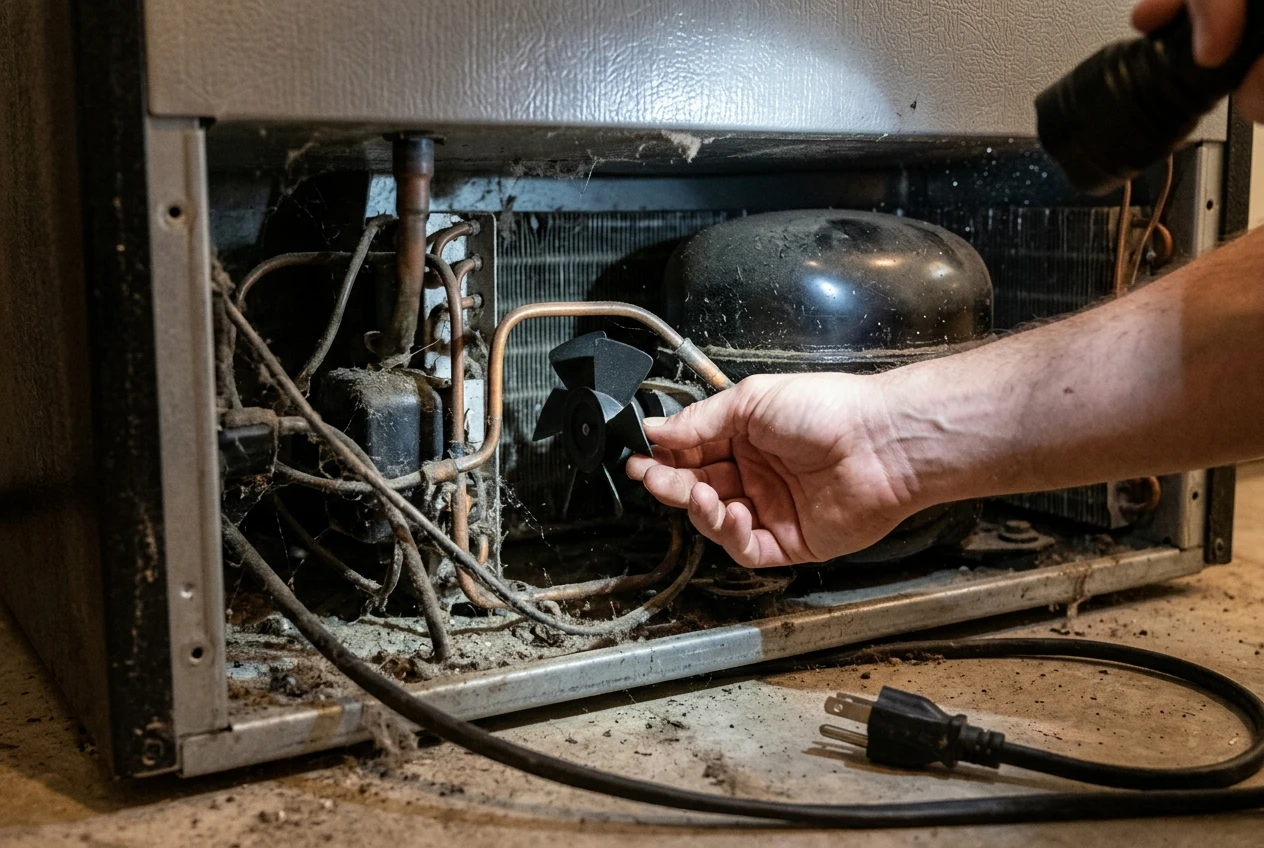
With the fridge unplugged and pulled out, locate the condenser fan near the compressor at the back or bottom of the unit. Spin the blade by hand. It should turn freely and smoothly. If it’s stiff, wobbly, or doesn’t turn at all, the fan motor may have failed, or something like a chunk of debris may be jamming it.
A quick way to check it’s working under power: plug the fridge back in briefly and listen or look (carefully, keeping your hands clear) to see if the fan is running. If the compressor is running but the condenser fan isn’t, that fan motor is a likely culprit and a relatively inexpensive part to replace.
Listen for the compressor and know what normal sounds like
The compressor is the heart of the cooling system, and it’s also the most expensive part to replace, so it’s worth understanding what normal operation sounds like before you jump to conclusions.
A healthy compressor produces a steady, low hum when it’s running, similar to a small motor. It cycles on and off throughout the day rather than running constantly, though it can run for long stretches in hot weather or right after the door’s been open a lot.
Here’s what should get your attention:
- No sound at all, ever: The compressor may not be getting power, or it may have failed. Check that power is reaching the compressor compartment.
- A clicking sound that repeats every few minutes: This often means the compressor is trying to start but can’t, which can point to a failed start relay or capacitor, or in some cases a compressor that’s seized.
- A loud buzzing or humming that doesn’t resolve: Could indicate the compressor is struggling against a restriction, often tied to a refrigerant issue.
If you hear repeated clicking without the compressor ever catching and running, that’s a sign worth paying attention to. It often means a component outside the sealed system, like a start relay, has failed rather than the compressor itself, and those parts are far cheaper to replace than people assume.
Check the evaporator fan and look for ice buildup behind the back panel
If you determined earlier that your freezer is cold but the fridge section isn’t, this is where to look next.
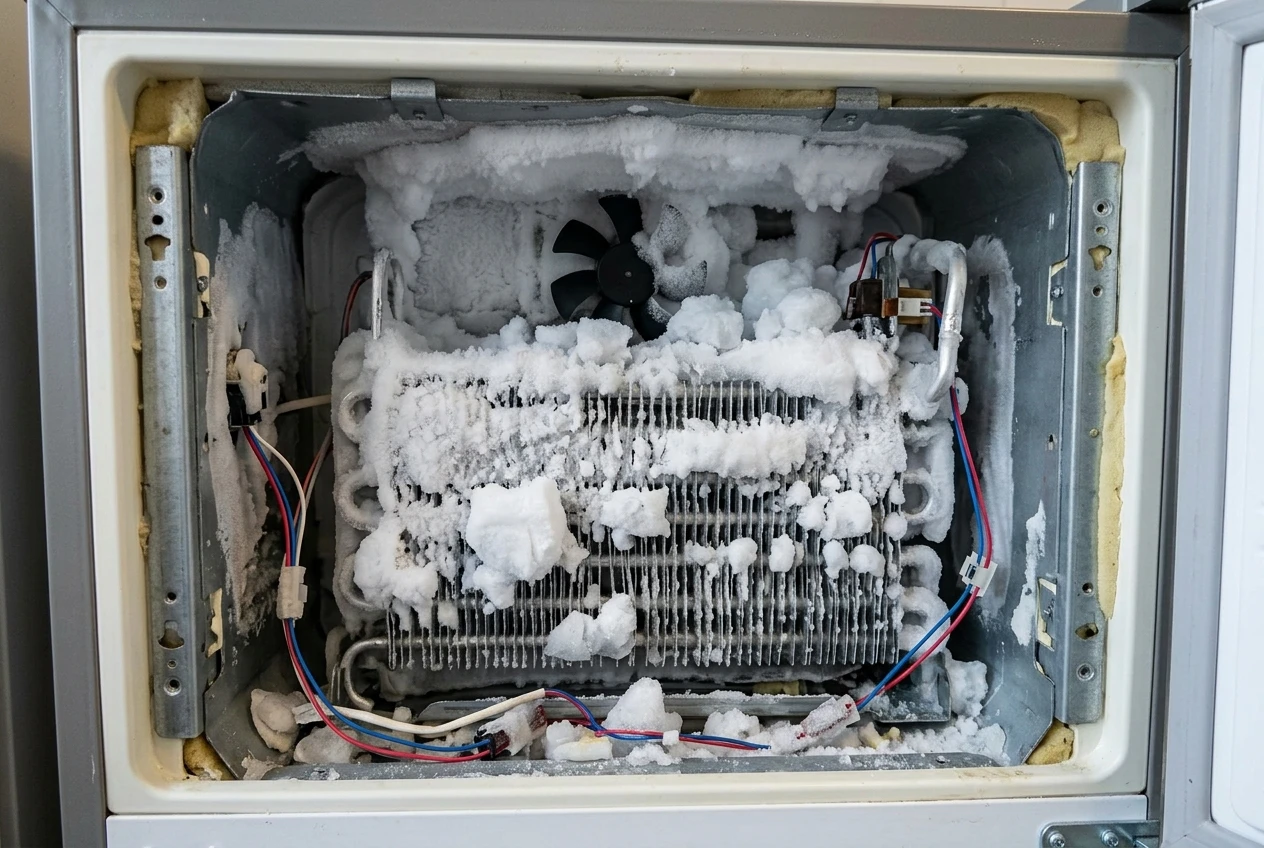
The evaporator coil and fan sit behind a panel inside the freezer compartment, usually at the back. The evaporator fan pulls cold air from this coil and pushes it through the duct system into the refrigerator section. If that fan fails, your freezer can stay cold (since it’s right next to the coil) while the fridge warms up because no air is being pushed to it.
Remove the back panel inside the freezer (check your owner’s manual, since the fasteners vary by model) and look at the coil. If you see a heavy layer of frost or solid ice built up over the coil, that usually points to a defrost system problem rather than the fan itself. Refrigerators run periodic defrost cycles to melt frost off this coil, and if the defrost heater, timer, or thermostat fails, ice builds up until it blocks airflow completely.
If the coil looks clear of ice, spin the evaporator fan blade by hand to check that it moves freely. A fan that’s seized or unusually noisy when running is a likely cause of warm fridge air with a cold freezer.
Check the door seals for a weak or dirty gasket
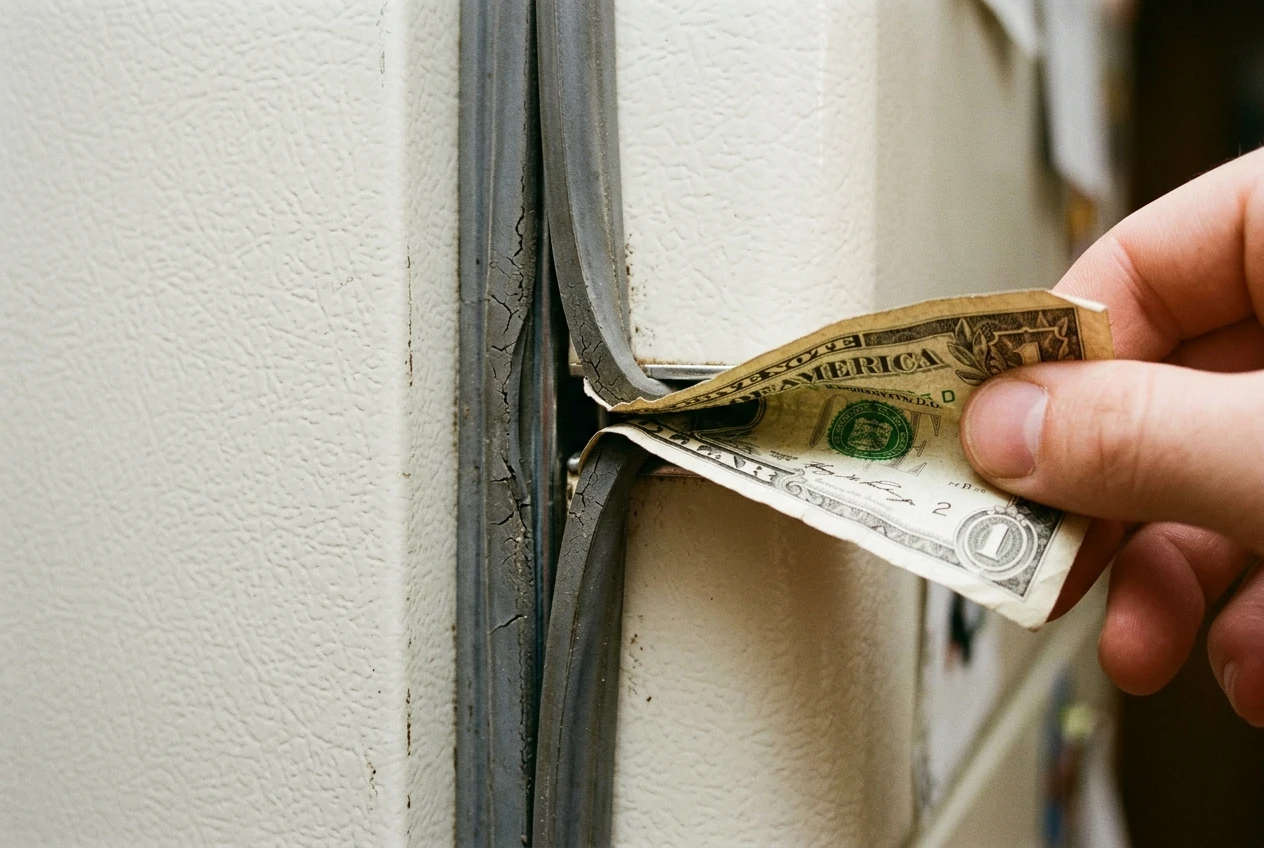
This one’s easy to overlook because it doesn’t seem serious, but a bad door seal forces the compressor to run far more than it should, and over time that can make an otherwise healthy fridge seem like it’s struggling to keep up.
Do the dollar bill test: close the door on a dollar bill so it’s halfway in and halfway out, then pull it out. You should feel some resistance. If it slides out easily, the seal isn’t holding properly at that spot. Check multiple points around the door, since a gasket can fail in one section while sealing fine everywhere else.
Also check for visible gaps, cracks, or food residue stuck to the gasket that’s preventing a tight seal. Sometimes cleaning the gasket with warm soapy water restores the seal. Other times the gasket has hardened or torn and needs replacing, which is a straightforward DIY job on most models.
When it’s likely low refrigerant or a failed compressor, and why that changes things
If you’ve worked through everything above, cleaned the coils, confirmed the condenser and evaporator fans are spinning, heard the compressor running normally, and checked the door seals, and the fridge still isn’t cooling, you’re now looking at the sealed refrigeration system itself.
Low refrigerant means there’s a leak somewhere in the sealed tubing. You might notice the compressor running constantly without ever bringing the temperature down, sometimes with an oily residue near connections or the compressor itself, which is a common sign of an escaped leak.
A failed compressor usually shows up as a unit that’s completely silent with full power confirmed everywhere else, or one that hums and clicks repeatedly without ever starting up.
Here’s why this matters for what you do next: the sealed system is pressurized refrigerant in a closed loop, and it’s not something you can diagnose further or repair with basic tools. It requires specialized equipment to test pressures, recover refrigerant legally, find and repair leaks, and recharge the system properly. This is the point where DIY troubleshooting should stop and a qualified technician should take over.
Repair or replace: making the call on an older fridge that won’t cool
If you’re facing a sealed system repair, the age and value of the fridge become the deciding factor.
Compressor replacement and refrigerant system repairs are among the most expensive refrigerator repairs there are, often running several hundred dollars once you include labor and parts. If your refrigerator is more than eight to ten years old, that repair cost needs to be weighed against the price of a new unit, especially since a fridge that’s had one major sealed system failure is more likely to have another down the road.
For a newer refrigerator, say under six or seven years old, a sealed system repair can still make financial sense, particularly if the unit is otherwise in good condition and the rest of its components are sound.
If what you found during troubleshooting was a bad fan motor, a worn door gasket, a failed start relay, or dirty coils, you’re in much better shape. Those are inexpensive parts and straightforward repairs that can add years of life to a fridge that would otherwise seem headed for the curb.
Working through these checks in order, cheapest and easiest first, will identify the cause of most cooling problems without spending a dime on a service call. Many refrigerator issues come down to something as simple as dirty coils, a bumped thermostat, or a worn gasket, not a failing compressor. If you find something you’re comfortable repairing yourself, it’s worth exploring the related repair and maintenance guides on Fix Right At Home before you buy any parts. If what you’ve found points to the sealed refrigeration system, involves working around electrical components you’re not familiar with, or just feels outside your comfort level, that’s the right time to call a qualified appliance technician rather than risk making the problem worse.
If you want some help narrowing things down, drop your refrigerator’s brand, model number, and what you’re seeing in the comments below, and I’ll do my best to point you toward what to check next.